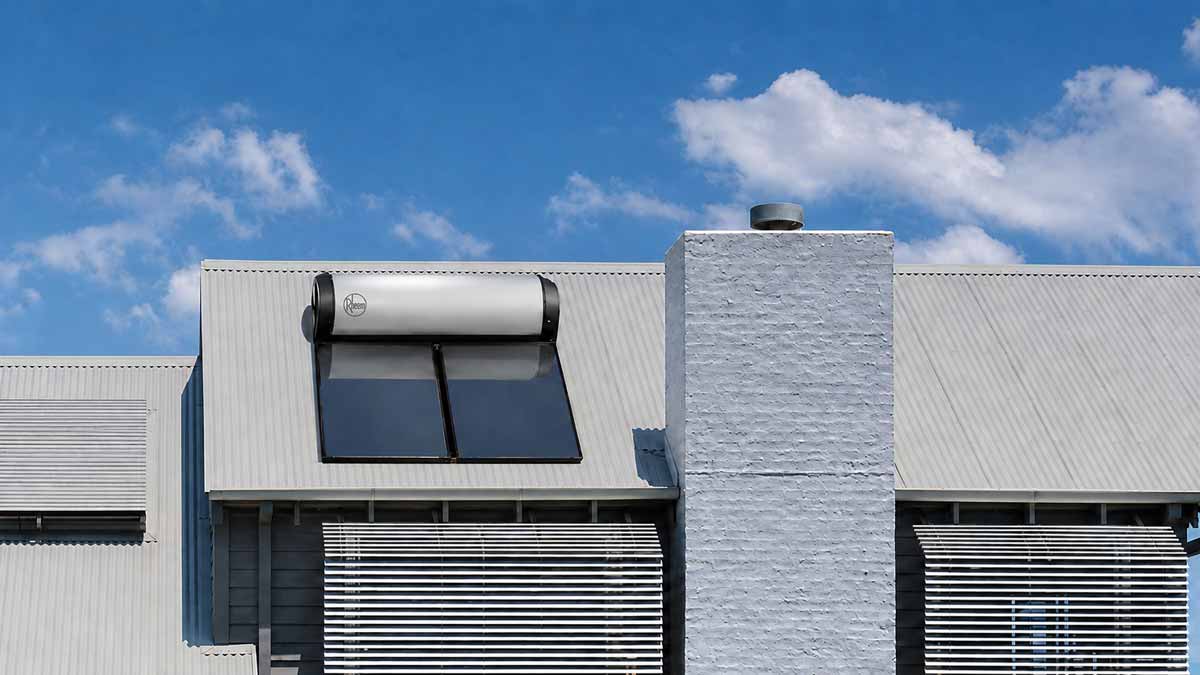
Are you thinking about switching to solar hot water?
If you’re considering replacing your electric or gas system with solar, our solar hot water specialists can assess your property, explain the available options and manage the complete installation.
Switching to solar hot water can reduce the electricity or gas used to heat your water, helping to lower ongoing energy costs and reduce your household’s greenhouse gas emissions.
However, choosing the right system involves more than selecting a make and model and installing solar collectors on the roof. Your household’s hot water usage, roof orientation, available space, existing connections and booster requirements must all be considered.
On this page
- Get the right advice.
- Is it worth switching to solar hot water?
- Switching from electric hot water to solar
- Switching from gas hot water to solar
- Is your property suitable for solar hot water?
- Rooftop or split solar hot water system?
- Solar hot water or rooftop solar PV?
- Government incentives for switching to solar hot water
- What is involved in switching to solar hot water?
- Can I switch to solar after my hot water system fails?
- FAQs about solar hot water
- Why choose Cheapa Hot Water Sydney?

Get the right advice. Talk to one of our solar hot water specialists.
Solar hot water is one of our specialties. We supply and install dozens of solar hot water systems throughout Sydney each year.
Solar hot water installation is more specialised than replacing a standard ground-level storage tank. It can involve rooftop collectors, pumps, controllers, sensors, boosters, specialist lifting equipment and a combination of plumbing, electrical and gas work.
With licensed plumbers, electricians and gas fitters on our team, specialist equipment and extensive practical experience, we can manage the entire installation without outsourcing work to other trades. This streamlines the process, avoids unnecessary delays and can save our customers time and money.
Talk to a solar hot water specialist
We’re available to answer your questions.
Read customer reviews on Google »
Is it worth switching to solar hot water?
A solar hot water system uses energy from the sun to heat water for use throughout your home or business.
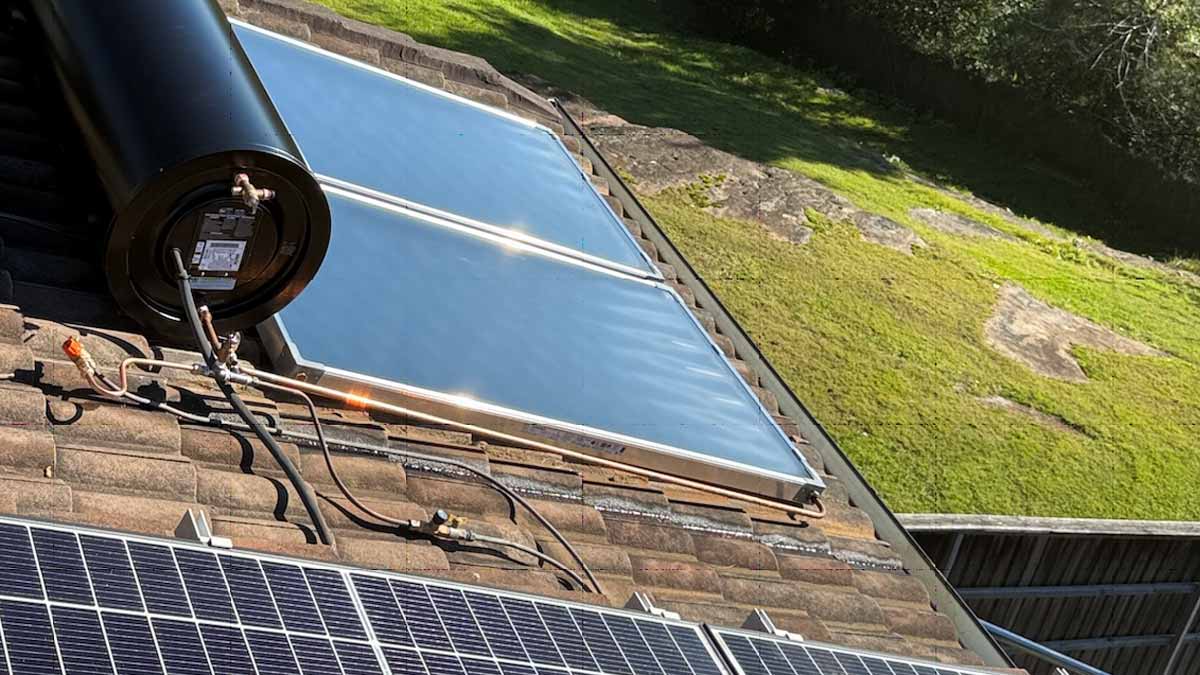
Roof-mounted solar collectors absorb heat from sunlight and transfer it to water stored in an insulated tank. Depending on the system, the storage tank may be installed on the roof alongside the collectors or at ground level as part of a split system.
Most solar hot water systems also include an electric or gas booster. This provides additional heating during extended periods of cloudy weather, when solar energy is limited or when hot water demand is unusually high. A correctly sized and professionally installed system maximises the use of free solar energy while ensuring you have a reliable hot water supply throughout the year.
Solar hot water is worth considering when:
- your existing electric or gas hot water system needs replacement
- your current system is more than 10 years old or requires an expensive repair
- your household or business uses a large amount of hot water
- you want to reduce your reliance on grid electricity or gas
- your property has suitable roof space with good access to sunlight
- you plan to remain in the property long enough to benefit from lower operating costs
- you want to reduce your household’s greenhouse gas emissions
According to the NSW Government, a solar water heater can reduce water-heating bills by around 80%, with indicative savings of approximately $190–$700 per year.
The actual savings will depend on your existing system, household usage, energy tariffs, solar performance and the amount of booster heating required.
Switching from electric hot water to solar
Replacing a conventional electric storage system with solar hot water can significantly reduce the amount of grid electricity used to heat your water.
A solar hot water system uses roof-mounted collectors to absorb heat from the sun. The heated water is stored in an insulated tank, ready for use throughout the day. An electric booster provides additional heating during periods of limited sunshine or unusually high hot water demand.
When replacing an electric system, we assess:
- the size and condition of the existing system
- your household’s daily hot water requirements
- the location of the existing tank
- suitable roof space for the solar collectors
- the electrical supply and booster requirements
- whether existing pipework can be reused
- the most suitable storage capacity for your household
Where eligible, replacing an electric water heater with an approved solar hot water system may also attract federal and NSW incentives.

Switching from gas hot water to solar
You can also replace a gas storage or instantaneous gas hot water system with solar.
The new solar system may use either an electric or gas booster, depending on the chosen model, existing services and your preferences. Changing from gas to solar may involve alterations to pipework, electrical connections and gas services, which should be included when comparing the total installation cost.
Before recommending a system, we consider:
- whether gas will continue to be used elsewhere at the property
- whether an electric or gas booster is more practical
- the condition and capacity of the electrical infrastructure
- whether redundant gas connections need to be safely disconnected
- the position of the existing hot water system
- the cost and practicality of changing energy sources
Our solar hot water specialists can complete the required plumbing, gas and electrical work, meaning you don’t have to coordinate several different tradespeople, saving you time and money.
Is your property suitable for solar hot water?
Solar hot water works well for many Sydney properties, but every installation should be properly assessed.
Roof space and sunlight: The solar collectors require adequate roof space in a position that receives good sunlight. The direction and pitch of the roof, nearby trees, neighbouring buildings and other sources of shade can all affect performance.
Roof strength and access: A rooftop tank and collector system places more weight on the roof than a split system with a ground-level tank. We also consider roof access and whether specialist lifting equipment will be required.
Household hot water usage: The storage tank must be large enough to meet the household’s needs without being unnecessarily oversized. We consider the number of occupants, bathrooms, showering habits and other high-demand uses.
Tank location: Solar hot water systems are available with the tank installed on the roof or at ground level. The property layout, roof structure, available ground space and existing plumbing will help determine the most practical configuration.
Booster requirements: Most solar hot water systems include an electric or gas booster to provide reliable hot water during cloudy weather or periods of high demand. The booster must be correctly configured to avoid unnecessary energy use.
Rooftop or split solar hot water system?
There are two main configurations to consider when switching to solar hot water.
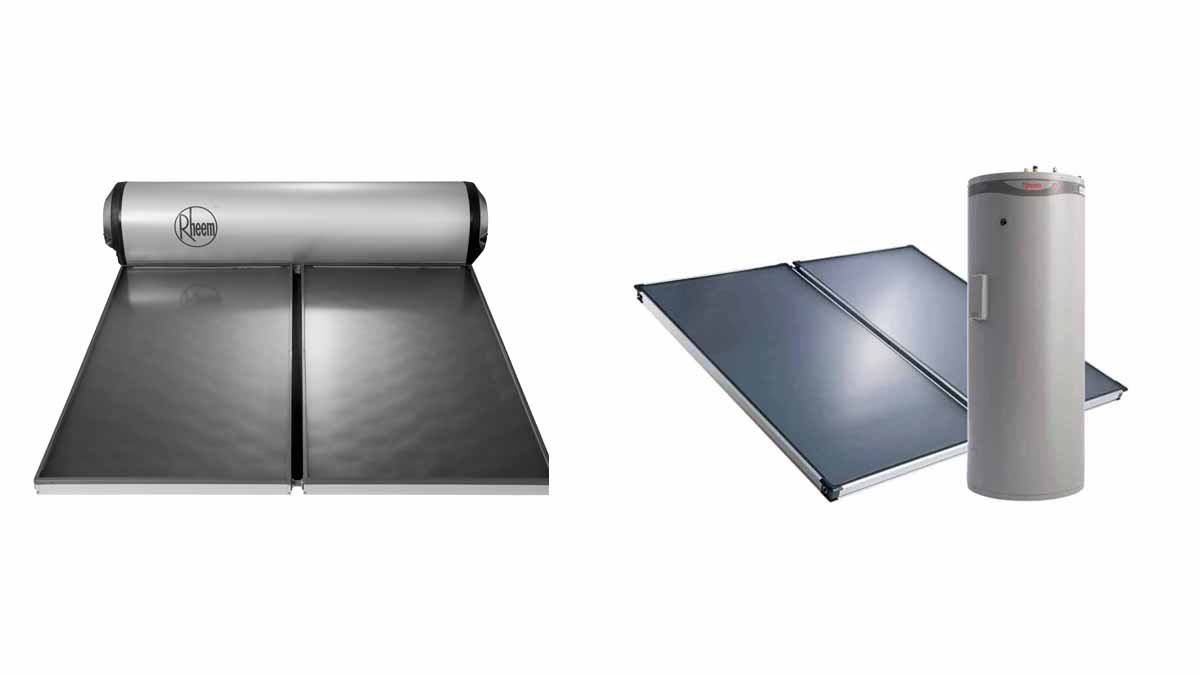
Rooftop solar hot water systems
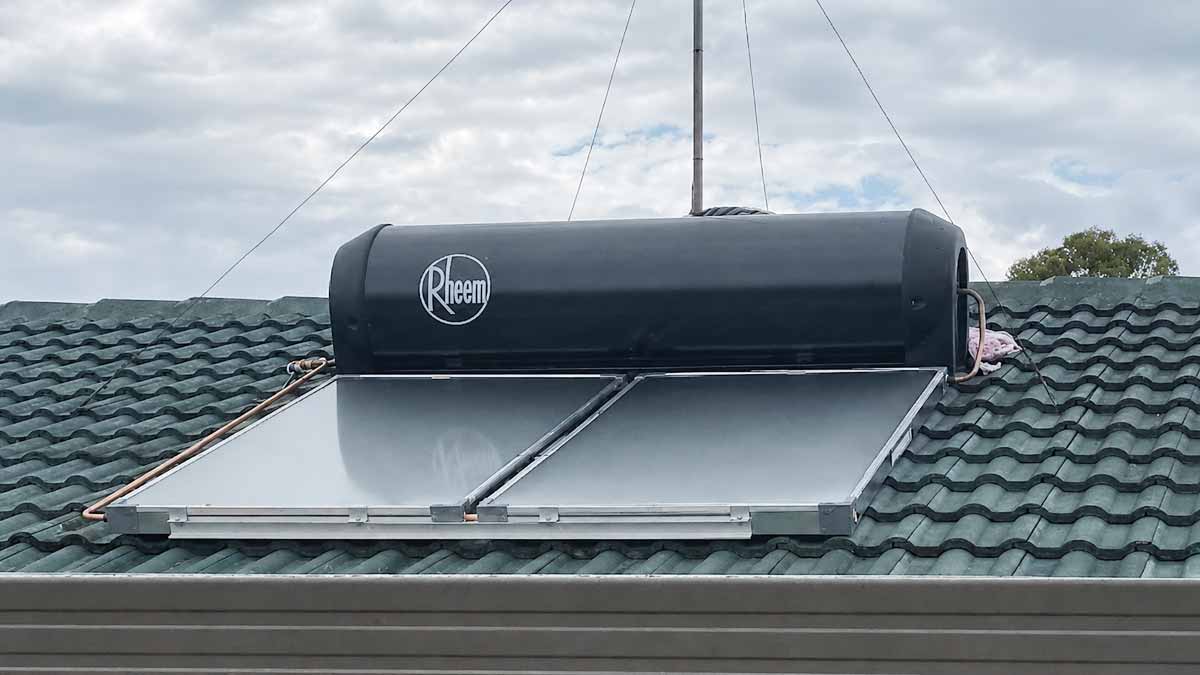
Also known as thermosiphon systems, these have the solar collectors and storage tank installed together on the roof. Heated water naturally rises from the collectors into the tank without requiring a circulation pump.
They can provide a simple and efficient solar hot water solution, but the roof must be suitable for the weight of the tank and installation access must be considered.
A split or pumped system has solar collectors on the roof and a storage tank at ground level. A pump circulates water or heat-transfer fluid between the collectors and tank.
This configuration reduces the weight placed on the roof and can provide greater flexibility when positioning the storage tank. However, it includes additional components such as a circulation pump, sensors and a controller.
Our solar specialists can explain the advantages of each configuration and recommend the most appropriate option for your property.
Solar hot water or rooftop solar PV?
Dedicated solar hot water and rooftop solar electricity are different technologies.
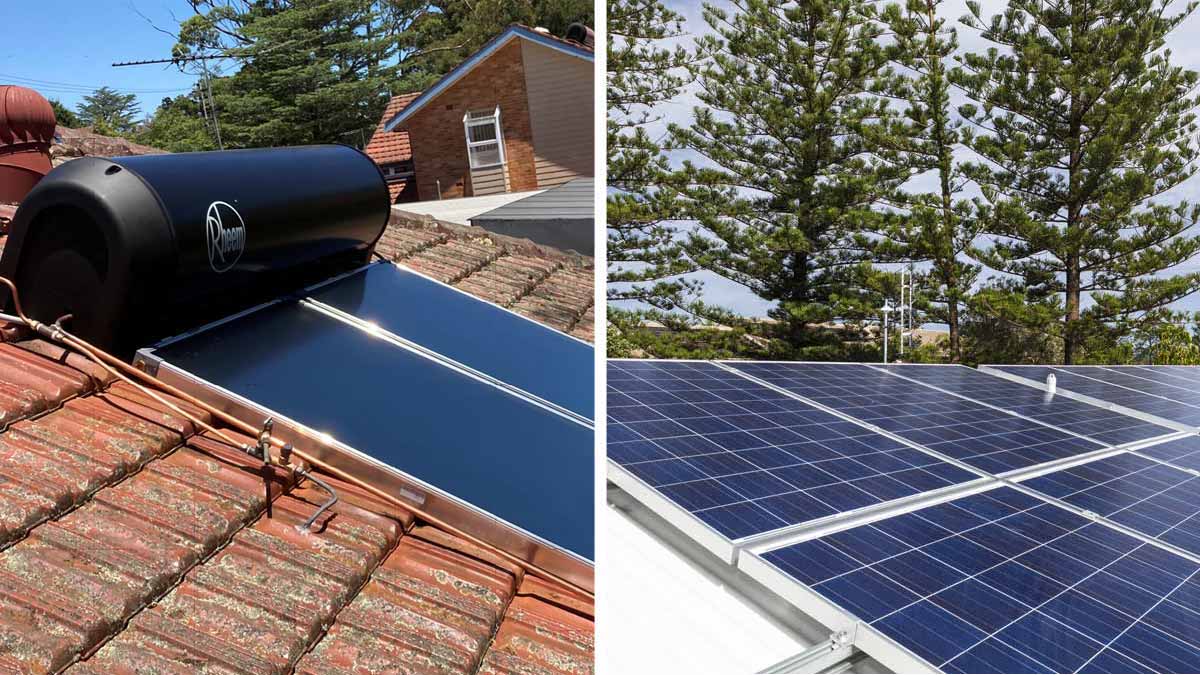
A dedicated solar hot water system uses roof-mounted collectors to absorb heat directly from the sun and transfer it to the stored water.
Solar photovoltaic panels generate electricity. That electricity can be used to power an electric storage or heat pump hot water system, particularly during daylight hours.
If you already have solar PV panels, or plan to install them, it is worth comparing:
- a dedicated solar hot water system
- a heat pump powered partly by rooftop solar
- an electric storage system timed to use excess daytime solar generation
There is no single solution that is best for every household. We can assess your property, hot water demand, existing energy systems and budget to help determine the best long-term option.
More information: Solar energy hot water systems using PV panels »

Government incentives for switching to solar hot water
Eligible solar hot water systems may qualify for Australian Government Small-scale Technology Certificates, commonly known as STCs.
STCs are not usually paid directly to the homeowner as a cash rebate. In most cases, the certificates are assigned to an installer or registered agent and their value is applied as an upfront reduction in the system price.
The number and value of STCs depend on factors including:
- the approved make and model installed
- the installation location
- the system’s calculated renewable energy contribution
- the installation year
- the current market value of STCs
The federal scheme continues until 2030, but its deeming period reduces each year. Systems installed during 2026 have a five-year deeming period. This reduces to four years in 2027 and continues declining until the final one-year period in 2030. As a result, the number of certificates available for an equivalent system generally declines over time.
Eligible NSW households and small businesses may also receive an upfront discount through the NSW Energy Savings Scheme when replacing certain electric or gas water heaters with approved solar hot water systems.
Incentives, eligibility conditions and certificate values can change. Our team can check the system and installation requirements and explain which incentives may apply before work begins.
What is involved in switching to solar hot water?
We manage the conversion from the initial assessment through to installation and commissioning.
Our solar hot water installation service may include:
- Inspecting the existing hot water system and connections.
- Assessing roof space, orientation, shading and access.
- Calculating the household’s hot water requirements.
- Recommending suitable solar system configurations and booster options.
- Explaining available incentives and completing the required paperwork.
- Disconnecting and removing the old hot water system.
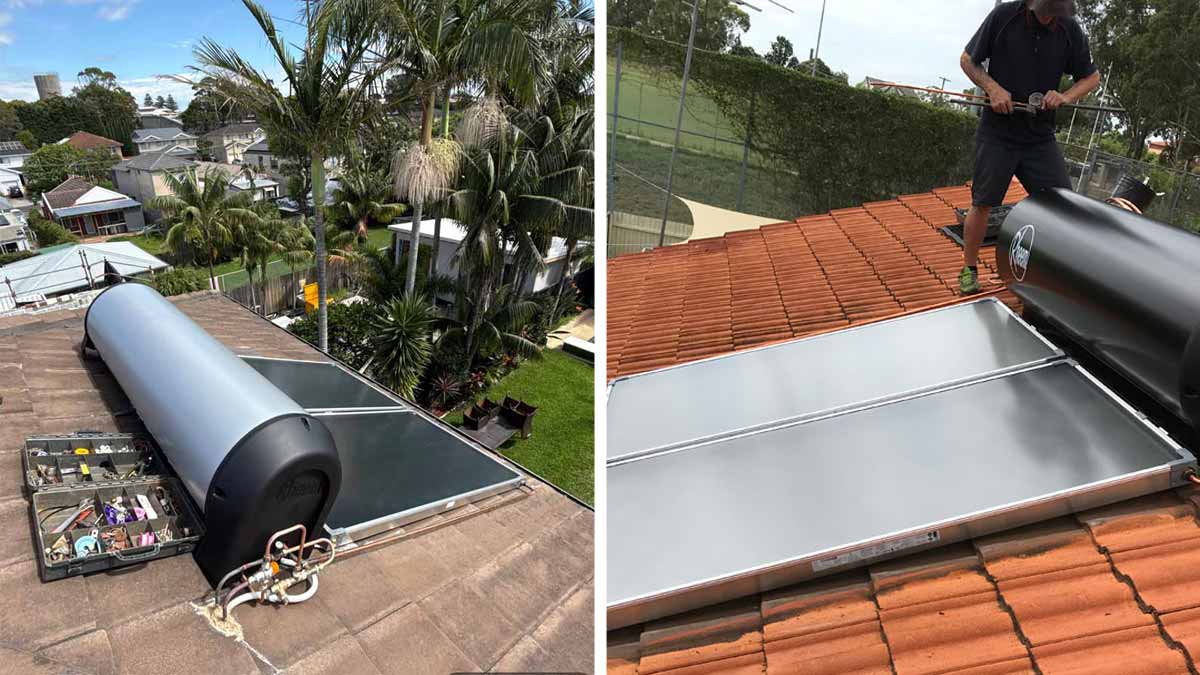
- Installing the storage tank, rooftop collectors and associated pipework.
- Completing the required plumbing, electrical and gas work.
- Commissioning and testing the complete system.
- Explaining how to operate the booster and care for the new system.
Depending on the property and installation complexity, many residential solar hot water upgrades can be completed within one day. More complex rooftop work, structural requirements or alterations to existing services may take longer.
Where suitable, a temporary hot water system may be available while your new installation is being arranged. Ask our team whether this option is available for your property.
Can I switch to solar after my hot water system fails?
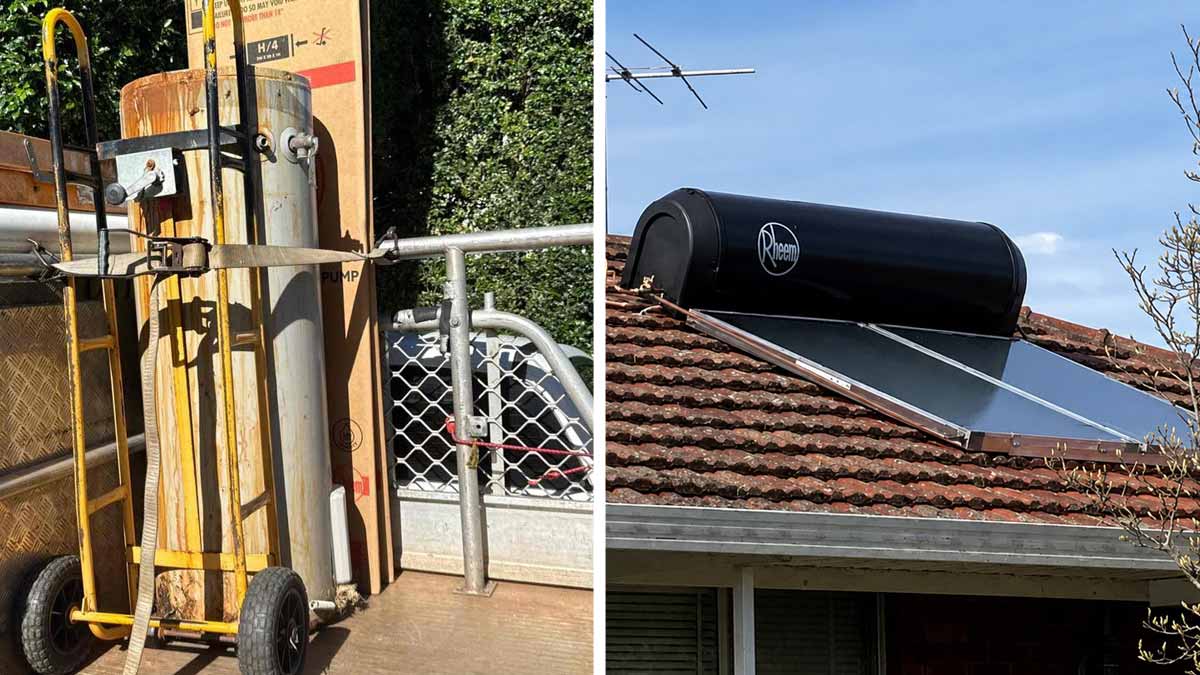
Yes. While an emergency replacement leaves less time to assess roof suitability, compare systems, organise specialist equipment and confirm incentive eligibility, we can make the switch to solar hot water fast and pain-free.
If your current hot water system is ageing, leaking, unreliable or requiring increasingly frequent repairs, planning the upgrade early can make the process easier.
If your system has already failed, contact us as soon as possible. We can assess the property, explain the practical options and determine whether a solar installation can be arranged within the required timeframe.
FAQs about solar hot water
Can any home switch to solar hot water?
Many homes can, but the property needs suitable roof space, sunlight, access and a practical location for the storage tank. A site assessment will determine whether dedicated solar hot water or another energy-efficient option is more appropriate.
Will I still have hot water on cloudy days?
Yes. Most solar hot water systems include an electric or gas booster. The booster supplies additional heat when solar energy is insufficient to meet the household’s requirements.
Can solar hot water replace an instantaneous gas system?
Yes. An instantaneous gas system can be replaced with solar hot water, subject to the property’s roof, tank space and connection requirements. We can advise whether an electric or gas-boosted solar system is the most practical replacement.
Do I need rooftop solar panels first?
No. Dedicated solar hot water systems have their own thermal collectors and do not require solar PV panels. Solar PV panels generate electricity and operate independently from dedicated solar hot water collectors.
Can I keep using gas as a backup?
Yes. Some solar hot water systems use a gas booster. Whether this is appropriate depends on the selected system and the property’s existing gas supply.
Are solar hot water rebates still available?
Eligible systems may qualify for federal STCs and NSW Energy Savings Scheme incentives. Eligibility and values depend on the system, existing water heater, installation and current scheme requirements.
How quickly can you install a solar hot water system?
Many standard residential installations can be completed within one day, although roof access, lifting requirements and alterations to existing services can affect the timeframe. We will explain the expected installation process when preparing your quote.

Why choose Cheapa Hot Water Sydney?
Hot water is our business!
If you’re ready switch to solar hot water, contact our friendly team today. We install dozens of solar hot water systems throughout Sydney every year. We’ll assess your existing system, property, household requirements and budget before recommending a practical solution. Our team can complete the required plumbing, electrical and gas work, install the rooftop collectors and storage tank, remove your old system and help with eligible incentive paperwork. Speak with one of our specialists today for expert advice you can trust.
The benefits of dealing with dedicated hot water specialist plumbers
Our experienced, licensed hot water installers, in fully equipped trucks, are on the road right now to ensure your hot water heater problems fixed quickly. We service all Sydney suburbs.
- We are licensed and insured hot water specialists
- We do not use subcontractors
- We are authorised to repair and install all water heater makes and models
- We repair and install thousands of hot water systems across Sydney
- We offer fast same-day service
- We operate fully stocked service vehicles for faster repairs and replacement
- We’ll beat any genuine quote
- We stock a huge range of replacement hot water systems, giving our customers choice
- We provide expert advice from qualified hot water technicians
- We are local Sydney hot water specialists
Contact Us
Fast hot water repairs throughout Sydney
Our licensed hot water technicians provide fast repair services throughout Sydney including the Northern Beaches, Upper and Lower North Shore, Eastern Suburbs, Hills District, Inner West, Western Suburbs + Blacktown, St George + Bexley, Campbelltown, Sutherland Shire, Penrith, Liverpool, Hornsby, and Ryde. With fully stocked service vehicles and access to thousands of spare parts, we can often diagnose and repair your hot water system on the first visit.